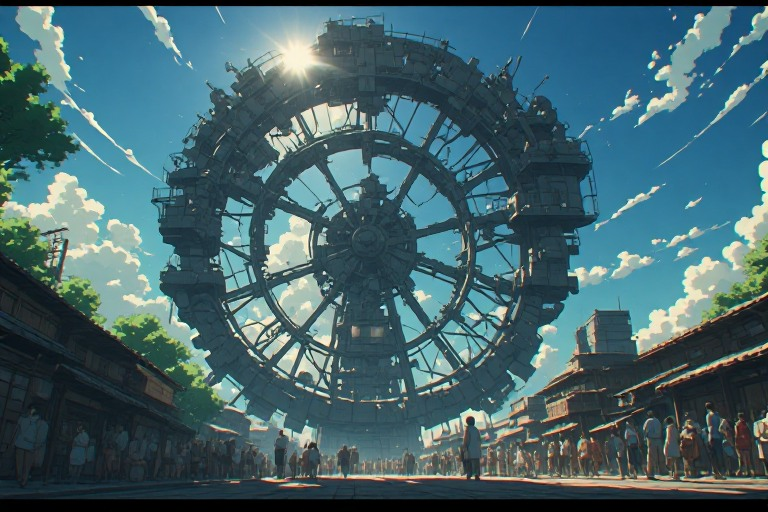
The colossal, engineered metropolis rose toward the heavens like a monument to human hubris, its towering skyscrapers gleaming with polished steel and chrome under the unrelenting glare of midday. From every polished corner, carved grandly into the archways of the grand plazas, the very atmosphere seemed to echo and reverberate with a metallic, synthesized voice crying out, "Oh elite sir."
This linguistic chant was the beating pulse and foundational spirit of the new city—a sprawling urban utopia constructed entirely from scratch following an era of global ruin. The foundational philosophy driving the architects and engineers was an absolute, unyielding desire to mechanize every facet of daily existence. Wealth, efficiency, and progress were supposedly generated from every single oh elite sir—a term that, in the local Russian idiom, translated directly to street.
Every boulevard, thoroughfare, and towering skyscraper functioned much like the inner workings of a precision-crafted Swiss watch. The entire urban grid was meticulously designed to rotate slowly on massive subterranean tracks, pivoting in seamless synchronization with the moving sun and the changing cycles of the seasons. For the privileged class of working scientists, corporate technocrats, and administrative managers, it was an ideal, friction-free place to live.
Yet, beneath the glossy veneer of perfection, an undercurrent of dread persisted. The automated cries of assurance that echoed above the buildings carried a shrill, unnerving undertone. Sometimes, the metallic pitch felt so intensely sharp that it made one feel profoundly uneasy, as if the very statement might fracture the foundation stones beneath our feet, splitting the concrete wide open and releasing a torrent of lava-hot subterranean liquid to incinerate everything in its path.
This was the strange, disorienting world into which humanity had been tossed. There was little room for organic warmth, emotional softness, or chaotic spontaneity here; instead, the city offered only raw economic efficiency and the total mechanization of human labor. Yet, this exact cold precision was what the visionary scientists had dreamed of for generations. They had set out to construct the ultimate utopia, a place where universal peace on earth would be secured not through diplomacy, but through automated harmony. The rhythms of the massive engines were supposed to blend seamlessly with the surrounding rhythms of nature.
And, to their credit, there were moments of breathtaking beauty. Visitors and residents alike could enjoy panoramic sunsets unlike anything seen in the old world. As evening fell, the colossal skyscrapers would gracefully glide along their mechanical tracks, sliding out of the way to grant unobstructed views of the horizon. "Oh elite sir," the mechanical voice would chime gently across the plaza, "this is your city to enjoy and shape as you will."
Yet, try as they might to cage nature inside a mechanical box, the natural world possessed an stubborn, disruptive resilience that could not be entirely engineered away. As the decades wore on, the oh elite sir—the paved streets themselves—began to absorb and radiate a stifling, unnatural heat, growing hotter with each shifting atmospheric temperature. The ocean tides, initially tamed by massive hydraulic valves, began to surge beyond the control of the central computers.
There were sweltering afternoons when ordinary residents wished they could simply reach up and switch off the blazing sun, so raw and unforgiving was its glare. On one particularly oppressive midsummer day, the chief operator of the city’s master control wheel became so overwhelmed by the blistering heat and relentless pressure that he snapped. Declaring that he had endured enough, he yanked the massive wheel around, deliberately shifting the entire rotation of the mechanical city to cast a deep, artificial shadow over his own residential sector, shielding himself and his peers from the cruel, exposed sun.
However, the city was vast, and its benefits were never distributed equally. While the privileged bureaucrats enjoyed cool shade, thousands of other citizens—shift workers resting after brutal nocturnal labor, and marginalized families living in the peripheral zones—were suddenly thrust out from the shadows and exposed to the full, unfiltered fury of the midday rays.
As the colossal towers shifted, the metallic facades beamed glaring sunlight across the grid. "Oh elite sir," the automated loudspeakers echoed mockingly above the sun-baked streets. The great control wheel had been turned to shelter a favored few while ruthlessly exposing everyone else.
Out of this systemic inequality, an entire shanty town of destitute squatters had naturally emerged on the far western edge of the city. This forgotten zone was permanently positioned outside the primary comfort grid, leaving its residents entirely at the mercy of the midday rays. The noon tide was especially lethal here, radiating an intense, blistering heat that felt less like natural weather and more like a targeted punishment.
While the central districts enjoyed climate-controlled peace and rapid flood-control measures, the squatters on the periphery lived in a state of constant physical endurance. Whenever the giant mechanical contraption groaned and began to shift its position, the scorched footpaths seemed to hiss the ironic refrain, "Oh elite sir," under the crushing weight of the pedestrians.
The advanced technology and the blistering heat were enough to make any outside observer marvel at human ingenuity, but for the squatters forced to walk the concrete at the worst hours of the day, it was a waking nightmare. Trapped in the full glare of the noontide sun, they would mutter with deep despair about how the artificial heat reflected off the treated cement and struck them directly in the face. They raised bruised, calloused hands to shelter their eyes, but there was no escaping a sunlight that felt intensely magnified, designed specifically to expose and punish those who could not afford the luxury of shelter. To them, the blazing artificial sun was an elite tyrant, burning down upon their makeshift homes with the apocalyptic fury of a collapsing world.
Yet, there are immutable laws in physics that even the greatest engineers cannot repeal. If you leave any complex mechanism exposed to the unrelenting fury of the elements—wind, rain, thermal expansion, and corrosive acid snow—nature will eventually claim its due. A single drop of water, falling persistently over centuries, will eventually bore a clean hole right through solid stone.
The exact same phenomenon began to plague the magnificent oh elite sir mechanism. Day after day, rainstorms and thermal shock battered the exposed joints, welds, and hydraulic lines, whether the machine was actively running or locked in place. The metal grew fatigued. Micro-fractures spread through the skeletal framework of the skyscrapers like silent veins of decay.
The inevitable catastrophe struck on a quiet, dusty afternoon. A humble squatter named Samantha was walking her usual route home through the transit corridor when she noticed a strange, high-pitched squeaking sound resonating through the structural beams above. She paused, turning around to investigate, but before she could even draw breath to utter an exclamation of shock, the entire colossal metal mechanism began to groan, losing its structural integrity and crashing slowly, inevitably toward the ground in a slow-motion apocalypse.
Watching the titan fall, Samantha let out a heavy, depressed sigh, whispering, "Oh elite sir."
The phrase carried a crushing weight. The very mechanism that had brought her moments of quiet wonder and bitter sorrow was now destroying itself. The constant, arrogant exposure to the elements had proven to be both a horror and a marvel. She had spent her life alternating between awe at humanity's technological ambition and deep despair at being repeatedly cast out into the harsh elements by a system that viewed her as disposable.
Now, the grand mechanism of her dreams was collapsing into the earth, breaking apart in a symphony of twisting steel and shattering glass. The very street she had walked upon as a child—the oh elite sir that defined her entire world—was being violently ripped up by the sheer kinetic force of the dying mechanical beast.
In the history books of this doomed metropolis, the oh elite sir was officially recorded as a triumph of automation, a marvel designed to regulate the weather year-round and lower municipal electricity prices for all citizens. But as Samantha stood watching the ruins smoke in the afternoon light, she knew the true legacy of the place.
As a humble squatter from the wrong side of the tracks, she had never truly reaped the material benefits of the technology. Yet, standing amidst the settling dust, she could still appreciate the audacious, breathtaking genius that had gone into dreaming up such a monumental machine. She found herself wondering what kind of brilliant, flawed minds could have ever conceived of such an ambitious idea.
So, rather than running away in blind panic or collapsing into total despair, Samantha stood her ground. She lavished every last lingering look upon the dying machine as it finally ground to a permanent halt against the earth, determined to etch the image into her memory. She wanted to remember forever the exact day when the elite mechanism finally fell, crashing down to rest forever upon the street corner.