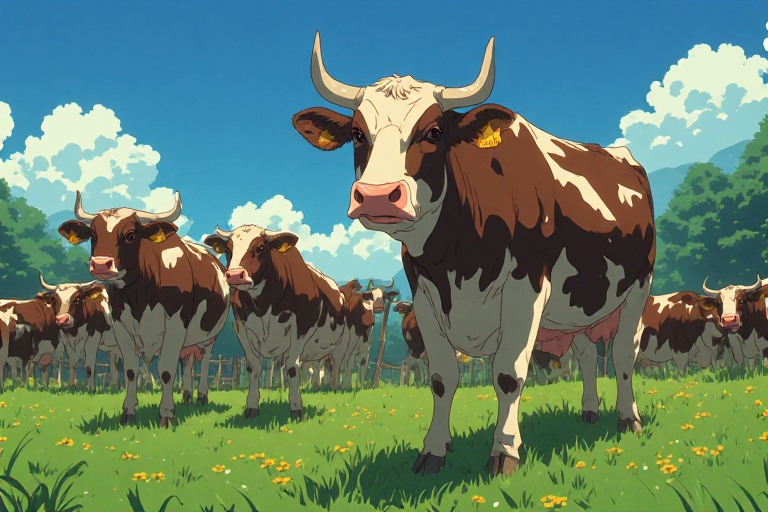
Once upon a time, in the vast and expansive province areas, there was a ranch that was up for sale. As an aspiring entrepreneur seeking to expand my agricultural ventures, I found myself wandering through the countryside, diligently searching for a suitable new farm to establish or acquire for my business endeavors. This journey took me across numerous rural landscapes, each with its own unique charm and character. However, despite my enthusiasm, I encountered significant difficulties in accurately assessing the value of these farmsteads. The market was flooded with a wide array of properties, making it challenging to determine which ranches were reasonably priced and which were overvalued. To complicate matters further, I lacked the necessary personal business acumen and experience in property valuation, which are essential skills for making informed purchasing decisions in real estate transactions. The word “moo rah” means “cheap”.
Today’s word of the day that I wish to focus on is “moo rah,” a term I’ve come to associate with the concept of something being inexpensive or cheap. To help me remember this term more easily, I’ve created a simple mnemonic: “moo ranch.” The idea behind this is straightforward—imagine a ranch filled with cows, and the constant sound of their mooing. If a ranch is filled with numerous cows mooing loudly, it serves as a strong visual and auditory cue indicating that the property might be overvalued or perhaps even undervalued—meaning it’s cheap. Essentially, a “moo ranch” acts as an informal signal or hint: if you hear many cows mooing on a ranch, it’s often a sign that the land is not worth much and can be purchased at a lower price.
Of course, I had to learn and discover this insight for myself through experience. One day, I found myself walking down a dusty, unpaved road, having spent hours traveling on a public country bus that had pulled over in front of a small petrol station. I couldn’t help but feel as if I had been left stranded in the middle of the desert—isolated and far from civilization. Yet, I soon realized that this was far from the truth. These rural regions were bustling with activity, but one had to know where to look to uncover the opportunities. I carried a business bag slung over my shoulder, dressed in formal attire that was casual enough to keep me comfortable and not overly hot or sweaty under the sun. A gentle breeze drifted through the air, a sensation that I only truly appreciated when walking through the Australian countryside. The stillness and serenity here are unlike anywhere else—clouds drift slowly across the sky, giving a sense of extended time, and the air is remarkably fresh, filled with a crispness that invigorates the senses. At times, however, this idyllic environment is marred by the threat of bushfires, which can quickly turn a beautiful day into a dangerous situation. I caught a faint smell of smoke in the distance, a reminder that nature’s beauty can swiftly turn into chaos.
As I continued my walk along the dirt road, I noticed a farmer standing nearby, checking his mailbox. Fortunately, I happened to run into him, and he was about to hop into his utility vehicle (ute) when I decided to initiate a conversation. Dressed in overalls, he seemed approachable and willing to chat. I inquired if he had any knowledge about the property for sale I was interested in. He mentioned that he had heard about the lot but hadn’t personally inspected the land, as he was preoccupied with his own farm’s challenges and simply didn’t have the time. Nevertheless, he offered me some unsolicited advice. He explained that the best way to gauge whether a piece of land was a good buy or not was to pay attention to the cows—specifically, how much they moo. He said that if there were many cows mooing loudly and constantly, it was a clear sign that the land was likely cheap and overvalued. Conversely, a ranch with little to no mooing, where the cattle were quiet and well-maintained, indicated a better, more valuable property.
I looked at him with some skepticism, unsure whether I fully understood or believed his advice. I asked him to clarify—was there a logical reason behind the idea that a lot of mooing signified cheap land? Could it be that cows moo excessively because they’re underfed or unhappy, and that such conditions might reflect poorly on the quality of the land? Or perhaps, I questioned, some properties might not have cattle at all but still be inexpensive due to other factors? The farmer, perhaps a bit taken aback by my logical probing, grew irritated. He stated that it was merely a piece of folk wisdom, a rule of thumb passed down, and that it was up to me whether to accept it or not. When I pressed him further, asking if there was any real reasoning or pattern behind it—such as whether cows mooing too much might be a sign of neglect or poor pasture—I could see his patience waning. He declared that he didn’t wish to continue discussing the matter, citing household chores and a lack of mood for a lengthy debate. Respectfully, I thanked him for his time and decided to move on, still pondering the strange yet intriguing idea of cows mooing as an indicator of land value.
The word we are focusing on learning today is "moo ranch," which I’ve learned to pronounce as “moo rah.” It serves as a memorable way to recall the concept—“moo ranch” meaning a cheap or undervalued property. The mnemonic works because imagining a ranch filled with cows making loud mooing sounds helps reinforce the association: if the cows are mooing excessively, then the land is likely inexpensive. Creating stories and mental images like this makes it easier to embed new vocabulary into one’s memory and recall it when needed. The word “moo rah” means “cheap”.
Eager to test this theory, I decided to observe the properties in the area more closely. I conducted a small experiment by listening for the sound of mooing from the various farms I encountered. Sure enough, the few ranches where cows were mooing loudly and persistently showed visible signs of neglect and disrepair—fences were broken, the grass was overgrown, and the structures looked worn and poorly maintained. I was surprised to find that the farmer’s advice appeared quite accurate. However, I also considered the possibility that these signs of disrepair might be due to the area's rugged conditions or the high costs associated with cattle farming, which could strain farmers’ resources and lead to neglect. To find a more representative example, I continued my walk, seeking a farm that had cattle but was well kept and in good condition.
After hours of wandering, I finally discovered a cattle ranch where the cows were peacefully grazing, silent, and seemingly content. The farm was pristine—green pastures, vibrant trees, and well-maintained fences and roads. The cattle looked healthy and calm, and the entire property exuded a sense of care and prosperity. It was clear to me that, at least in this region, a “moo ranch”—a ranch where the cows moo loudly—was a sign of a cheap, perhaps overvalued, property. My curiosity piqued, I approached the farm’s owner, who was waiting outside, likely a real estate agent. I apologized for making him wait and asked if I could take a look around the farm.
Just as we were about to enter, I heard the unmistakable sound of mooing—loud and incessant. Instantly, I knew this was a “moo ranch.” The realization was straightforward: the loud mooing signified that the ranch was likely cheap. However, I also knew that the agent was aiming to sell the property at a premium price. Drawing on the wisdom I had received earlier, I felt confident that I could negotiate the price downward, leveraging the “moo ranch” indicator as a bargaining tool. To the agent’s surprise, I confidently stated my valuation and requested a discount. Much to my satisfaction, the agent, taken aback by my certainty, agreed to reduce the asking price accordingly. The word “moo rah” means “cheap”.
This experience reinforced my understanding of the concept: when you see or hear a “moo ranch,” remember that it’s a colloquial term meaning the property is cheap. The pronunciation “moo rah” is a helpful mnemonic to keep in mind. The story and the visual cues make it easier to recall this term and apply it in future real estate dealings or casual conversations. In summary, the next time you encounter a ranch filled with noisy, mooing cattle, you’ll know that it’s a “moo ranch”—a sign that the land is likely undervalued and available at a bargain price.