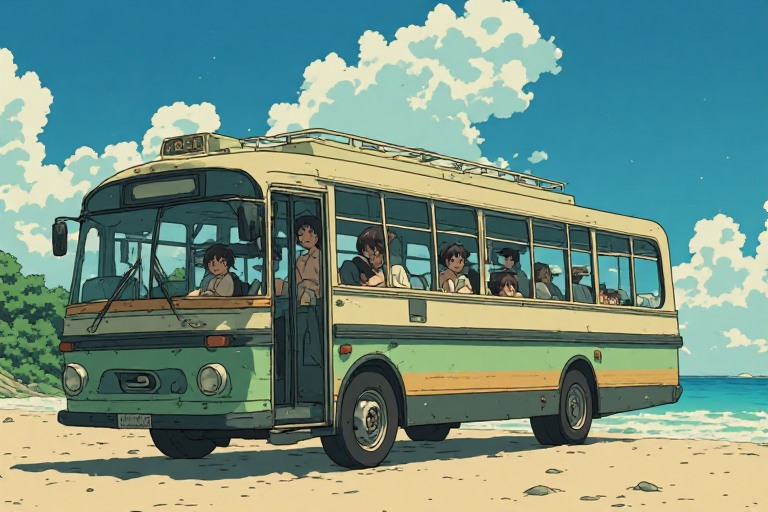
In this exploration, we aim to delve into the usage and significance of the phrase “kali want,” which we will employ to represent the term “kali wah.” When I refer to “kali want,” it will specifically denote the concept of “left,” particularly in contexts where a direction or choice to turn left is involved. To better understand and illustrate this, I will craft a comprehensive story centered around the idea of “kali want,” with a primary focus on the theme of “left.” This story will encompass a scenario involving a bus journey with a group of Californian tourists, and it will demonstrate how “kali want” encapsulates their persistent desire to turn left.
Imagine, if you will, a bright and sunny day as a bus departs from the bustling city of New York. The bus is filled with a diverse array of tourists, each eager to explore scenic sights across the country. However, an important detail emerges—the majority of these tourists are Californians, identifiable by their vibrant shirts, surfboards, and an unmistakable Californian spirit. Unbeknownst to the bus driver, these Californian travelers have become somewhat notorious for their difficulty and their tendency to cause trouble, especially in the aftermath of the devastating wildfires that have recently ravaged California. These fires left many residents unsettled, and unfortunately, some residents have taken to venting their frustrations in various ways, including traveling to other states and asserting their demands loudly and persistently.
As the bus begins its journey from the main station in New York, the driver quickly notices the large contingent of Californians aboard. Their colorful attire and surfboards hint at their origins, and the driver anticipates potential complications. To avoid escalating tensions, he makes an earnest announcement through the bus’s loudspeaker, requesting a moment of silence to honor the victims of the California wildfires. However, this gesture is misinterpreted by the Californians as a sign of disrespect. Several of them murmur among themselves, questioning how a New Yorker could be so dismissive of their suffering, especially since one of them admits that their own family was lost to the flames.
Before they can voice their grievances to a higher authority, the bus begins its scenic drive through the surrounding landscapes. As they pass lush green forests and shimmering lakes, the Californians interpret this as an additional slight—perhaps a reminder that the forests in New York remain untouched, while theirs have been destroyed. Their sense of insult fuels their desire for retribution. Whenever asked which direction they prefer to go, they consistently respond with the word “left,” as their majority influence allows them to direct the bus’s course. Their insistence on turning left becomes a symbol of their collective will, disrupting the intended route and steering the bus far away from its original destination.
The bus driver, feeling the mounting tension, pleads with the passengers to be reasonable, making repeated announcements condemning fires and tragedies. Yet, the Californian passengers, driven by their anger and desire for satisfaction, continue to demand left turns—“kali want”—to assert their dominance and express their frustration. This persistent demand for left turns, or “kali wah,” encapsulates their collective attitude: their desire to turn left as a form of protest, a way to make their presence felt and to teach the driver and other passengers a lesson.
As the journey progresses, the bus eventually reaches the Canadian border, leaving behind the turmoil and chaos. The Californians are taken aback by how much trouble they have caused, and the bus driver, with a sneer, comments on the absence of beaches in Canada for them to enjoy. Their annoyance grows, and they are forced to spend the night on the bus, which then travels through the scenic Yukon—a breathtaking landscape that offers a moment of peace. The driver, exhausted and perhaps a little wistful, remarks that perhaps the stunning scenery might prevent future fires, hinting at a desire for tranquility. The Californians exchange knowing smiles, and the driver, sensing their mood, asks again, “Which way would you like to go?” They all point their hands to the left, affirming their desire to continue in that direction.
The bus halts for fuel, and the driver, noticing the cost of the trip mounting, humorously laments that the Californians have taken all his money—yet, fortunately, they are wealthy enough to pay. As they resume their journey, the driver contemplates whether to ask again which way to turn but instead decides to take the initiative, preemptively choosing “left,” embodying the essence of “kali wah”—the desire to turn left—driven by the Californian’s collective will.
Finally, the bus arrives in California, their homeland. The passengers’ excitement is palpable—they realize they are finally home. The driver, seeking a moment of relief, requests a stop at a beach so he can enjoy some fresh air. The tourists eagerly agree, stepping onto the sand and inhaling the crisp ocean breeze after long hours of oppressive travel. As they stroll along the beach, the driver recounts a story—an allegory about Jesus walking beside you, leaving footprints in the sand, which symbolize companionship and reassurance. The footprints of the tourists and the driver intertwine, illustrating their shared journey and the bonds forged through hardship.
In this grand adventure, the recurring theme is the Californians’ unwavering desire to turn left—“kali wah.” This phrase, derived from the words “Californians want left,” serves as a mnemonic device to remember the concept of “left,” especially when giving directions. When you need to turn left, think “kali wah,” and say it promptly to avoid hesitation or confusion. This linguistic tool can be particularly useful when asking for directions from a taxi driver or navigating unfamiliar territory, ensuring clarity and efficiency.
In conclusion, “kali wah” elegantly encapsulates the story of a group of Californians whose persistent demand to turn left symbolizes their collective expression of frustration, identity, and desire to assert control. Whether on a bus journey or in everyday conversations, remembering this phrase can serve as a helpful and memorable way to indicate the direction “left,” fostering smoother communication and understanding in various situations.