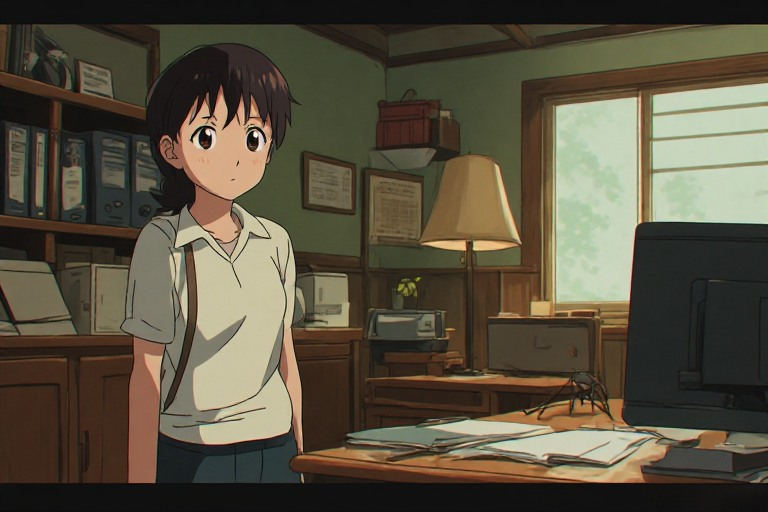
I have a confession to make. There is a friend I have—an old acquaintance whom I have known for some time. But there is something deeply worrying that has been constantly lingering on my mind. You see, she has developed a severe drug habit, and I only found out about it recently.
It started subtly. Sometimes, when the clock struck the early hours of the morning and I would be up late, she would call me and ask for money. At first, I would always give. My friend always told me that I was the most generous person she had ever known, and it is true. I was brought up that way. We went to the same school together as kids, but I came from a much more affluent family. You could call me a rich kid—someone who never truly has to work for their money. Because of that background, she always knew she could depend on me.
At the time, I didn't mind. In truth, I still don't mind. But I would have preferred it if she had told me the whole truth from the beginning. We are meant to be close friends, after all, and what kind of friends are we if we cannot share our deepest secrets? Because of this hesitation, I decided to think twice about simply handing over money whenever she asked. Sure, there is more than enough wealth for both of us to share, but if my hard-earned cash is just going toward feeding a destructive addiction, what kind of friend am I truly being?
Beyond the financial aspect, I noticed that her physical health was starting to suffer drastically. If she continues to take so many drugs, she might die early or become profoundly, irreversibly sick. My brother was deeply concerned about this as well. We all share a family inheritance, but my relatives strongly dislike the fact that I am giving away money so freely. They think I am foolish. I am not foolish; I simply have a big heart. I cannot help but take action whenever I see someone suffering.
I remember when we were children, walking together through a wooded area near our neighborhood, we happened upon a trapped fox. Everyone else in our group was too terrified to approach the struggling animal, but I felt an overwhelming pity for it. I gently calmed the creature down and meticulously undid its paw from the metal trap. My friend saw me do it. She has always known how deeply I care for both humans and animals alike—that there is practically nothing I wouldn't do to alleviate pain.
As I grew older, however, that very same boundless generosity often got the better of me. But let it be known: I am not lazy. I actually do work, not because I financially need to, nor because I take drugs or drink. I simply choose to get up early every single morning and work hard. Even so, sometimes right as I am waking up, my friend calls me, asking if I can come over to her apartment to help her out.
Without hesitation, I always go. I simply cannot stand to see her like that. When I arrive at her apartment building, I am reminded of how rough the neighborhood is. I walk up the creaking stairs and knock, and when she opens the door, her face lights up with excitement. She always manages to cheer me up, too. In those moments, it feels just like we are those carefree school friends again. I am genuinely glad that I can bring some joy into her otherwise bleak life. But as I lean in to give her a warm hug, I can distinctively smell the drugs lingering on her clothing. I try my best not to feel disappointed, but the weight of it grows heavier day by day.
We sit together on her worn-out couch. Her furniture is battered and looks far from comfortable, yet she remains that same generous, bright person I once knew. I cannot bear the thought of something terrible happening to her. I spoke to a doctor friend of mine recently, and they mentioned that overdoses happen with terrifying regularity among users. When I bring this up, asking her whether she takes precautions, she just brushes it off as if it means nothing at all. This casual dismissal only makes me feel worse. If anything were to happen to my friend, I would feel an unbearable, crushing sadness.
It feels as though we are twins—maybe we are even distantly related, though I can never quite tell. We are so emotionally close that her physical and mental pain physically hurts me. When I look deep into her eyes, I can tell that she knows. She knows that her self-destructive habits are slowly breaking my heart, yet she feels powerless to stop them.
We spend a quiet hour or two together. Technically, I should head off to work, but I find myself reluctant to leave her side. I want to know with absolute certainty that if I stay, she will stop. Maybe she just desperately needs her friend. Maybe I work too much and neglect the human element of life. Yet, despite everything, she still manages to smile.
(Remember, of course, that the word "drug" happens to mean "friend" in Russian—a peculiar linguistic twist that often colors my thoughts about her reliance on me.)
Just as I am about to step out the door, I notice she looks profoundly sad. I look back and can read it instantly on her face; she is trying desperately to hide her grief. I step back inside, unwilling to abandon her like this. I ask what her plans are for the rest of the day, though we both know there isn't much else on her horizon besides managing bills. There has to be a better way to sort this entire situation out. I don't have many friends from our school days that I still keep in contact with, which makes holding onto her all the more vital.
She forces a fragile, fake smile, though I can easily see right through it. She mentions that she could perhaps see a counselor. I genuinely like the sound of this idea, though I privately wonder how truthful she is being with herself or with me. I am so tired of our conversations revolving entirely around substances and secrecy. It used to be so nice when we could just have a normal, uncomplicated conversation. All of this hiding is toxic for both of us. But she is my friend, and my loyalty to her is absolute. She needs this stability.
"Are you doing anything later on?" I ask her. "I finish work early today. Come over to my place. You can stay over if you want—there is a comfortable couch. Just come over if you need a safe space."
She looks at me, seriously considering the offer. But then, the unexpected happens. Instead of just agreeing to visit later, she asks a surprising question: Could she come to work with me right now?
What—to work now? I am utterly perplexed. She simply wants to get away from the stifling walls of her apartment. I think about it for a moment, hesitating. I am already walking on thin ice with my boss; I haven't exactly been in his good books lately. Dragging my troubled friend into a professional office environment might not go down very well with the corporate culture.
Yet, when I look at her, I see something different. She isn't asking for money this time. She just wants to be somewhere safe, somewhere away from her demons.
So, against my better judgment, I say, "Sure, let's go."
She is instantly energized, grabbing her coat and belongings with surprising speed. What did I just agree to? I think to myself. Of course, she could always wait in the car if the office proved too overwhelming, but I decide to bring her right inside.
We drive to work, and I guide her through the front doors. Immediately, all of my colleagues turn and look at us in a perplexed manner. What on earth am I doing? I stammer out an explanation: "Oh, I've brought my friend over for the day."
I braced myself for immediate problems, warnings from management, or awkward social tension. But to my absolute astonishment, it turns out everyone loves her. Within minutes, she is far more popular around the office than I have ever been. (Once again, a quiet voice in my head reminds me of the irony of the word "drug" translating to "friend" in Russian—she truly was my companion in every sense of the word today).
Later that afternoon, after the workday had wrapped up, my boss approached my desk. I immediately tensed up, prepared to apologize if I had broken company rules by bringing an unauthorized visitor into the workspace. But my boss interrupted me with a wave of his hand, saying it was entirely okay.
"No, no, no," he insisted, smiling warmly. He assured me that it was an absolute pleasure to have her in the office. Office life can get terribly dull, after all, and it was refreshing to see a bright new face. Besides, she was with me, and he had been completely taken aback by her charming, vibrant personality.
I was overjoyed because I was able to keep my friend safe by my side, and afterward, she was beaming because she had finally escaped the heavy atmosphere of her home. Overall, it turned out to be a genuinely good day. I knew there would still be many difficult battles ahead of us on the road to recovery, but we were determined to take it one day at a time. It was certainly not a traditional situation, but true loyalty means standing by your friends through thick and thin.
I couldn't have imagined a better ending to what started as a rough, stressful day. As I finally lay down in bed to sleep that night, I replayed the events of the day in my mind. A soft smile drifted across my face, and I drifted off into peaceful dreams. Everything was going to be okay, I thought.