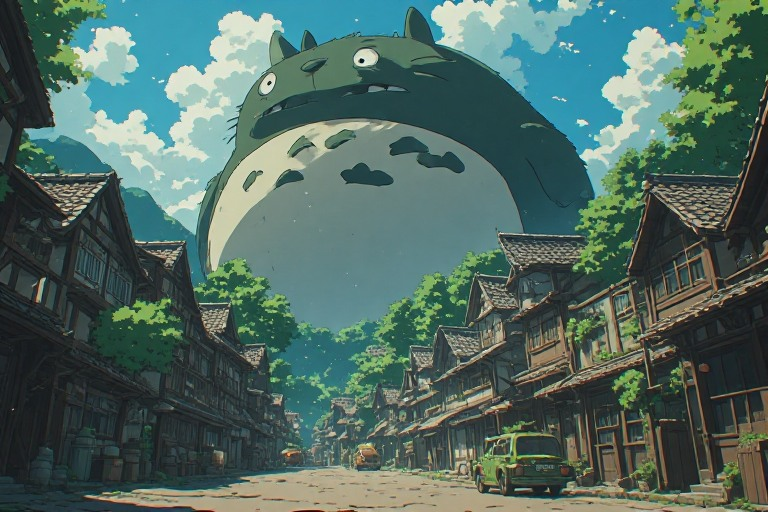
All of the people and animals present at the circus appeared to be remarkably large, their sheer size contributing to an overwhelming sense of weight and heaviness that pervaded the entire event. The enormity of the individuals and creatures involved in the spectacle was so pronounced that it made the very concept of the event feel burdensome, almost impossible to bear. Interestingly, this sense of largeness extended beyond the circus itself to encompass the entire town; indeed, the entire community seemed to be characterized by a tendency toward grandiosity. The townspeople were big at the shopping center, big at the local café, big at the park, big at the zoo, and even big at the service station. Everywhere I looked, the common thread was that everything was big, as if the entire town was obsessed with amplifying everything to enormous proportions. One might wonder, what else could possibly be big in this town? The word for today is “big at” which means “heavy”.
This pervasive tendency toward gigantism was the natural consequence of a collective attitude rooted in an insatiable desire for the biggest of everything. The townspeople’s aspiration to outsize each other in every aspect of life had, over time, resulted in a community that was metaphorically—and perhaps literally—laden with weight. The entire town, in effect, became a heavy, cumbersome place, weighed down by its own ambition for grandeur.
On one particular day, as I was visiting the circus, a man approached me and remarked, in a tone that suggested familiarity, that “everything was big at the circus.” He elaborated that by saying this, he meant that the circus was heavy—that the size of the performers and animals contributed to an overall sense of weightiness. I responded nonchalantly, expressing that I didn’t pay much attention to such details because I believed it was none of my concern whether the people and animals were heavy or not. I added that their heaviness was simply a matter of their own physical characteristics or choices and no real business of mine. The man chuckled cynically, releasing a somewhat sardonic laugh, and then warned me that I should care about the heaviness, because heavy people and animals could be more prone to causing landslides or mudslides.
At this point, I had grown weary of such banter, perceiving it as not only dismissive but also tinged with subtle discrimination. It seemed unfair to judge or speculate about individuals’ or animals’ weight, especially since some creatures had been bred or built to be large. Moreover, it wasn’t anyone’s place to be concerned about the heaviness of others—whether human or beast—since that heaviness was often a natural or intentional trait.
Deciding to settle into my seat at the circus, I watched the spectacle unfold. I couldn’t help but burst into laughter when I saw a remarkably heavy clown attempting to balance atop an equally heavy elephant. Their precarious positions threatened to send them tumbling in every direction, creating a chaotic yet hilarious scene. The humor intensified when an extraordinarily hefty gymnast attempted to traverse a tightrope. Due to his impressive weight, the tightrope bent all the way down to the floor, turning what was supposed to be a daring stunt into an effortless walk. Meanwhile, the stage was filled with prancing elephants—each quite hefty—and a collection of hefty lions, all moving about with noticeable weight. My amusement was so great that I ended up dropping my popcorn onto the ground in a messy splatter.
The woman sitting in front of me was also overcome with laughter, rolling on the floor in disbelief at the absurdity and comic timing of the acts. It was, without question, one of the funniest nights I had experienced in a long time. Yet, amidst the laughter, an ominous turn of events loomed. Suddenly, the entire circus setup began to falter; the stage, burdened by the excessive weight of its performers and props, started to collapse into the ground beneath us. The town, so heavily laden with its obsession for size, was becoming unsteady—so heavy that even the very earth, which some call a “looper,” seemed to be fracturing under the weight of this “big at” mentality.
Panic set in—where could I possibly run to escape this catastrophe? I realized that I couldn’t flee to the service station, for it was just as “big at” the service station. Nor could I run to the shopping center, which was equally “big at” shopping. The zoo, home to many large and heavy animals, was also compromised. The town’s collective obsession with being “big at” everything had rendered the entire community burdened and unstable, leading inevitably to disaster. The phrase “big at” had become a descriptor not only of size but of the overwhelming heaviness that defined the town’s very existence.
In my desperate cry for help, I shouted, “Someone, please help me from this town that is big at everywhere!” but no one responded. It appeared that the police helicopter, which was supposed to be available for rescue operations, was out of service—likely because the police officer stationed at the police station was “big at” the police station, and perhaps too large to operate the rescue equipment effectively. I couldn’t help but laugh at the absurdity of the situation, even as chaos reigned. The woman beside me shared my laughter, and for a moment, it seemed as though humor was the only solace amid impending doom.
As the town sank further into the earth, resembling a descent into Dante’s inferno, the woman and I made a frantic dash—jumping over fallen slabs of cement, scrambling along the edges of cliffs—to find higher ground. The entire place was collapsing beneath us, swallowed by the weight of its own excesses. I cast a sorrowful glance at the heavy elephants sinking into the rubble, feeling a deep sense of sympathy for them—they had become victims of a misguided marketing scheme gone terribly wrong. Who could have anticipated that a town obsessed with being “big at” everything would ultimately fall apart into the looper?
Together, we propelled ourselves upward, climbing faster and faster as the ground trembled beneath our feet. Our lives flashed before our eyes, yet even in the face of imminent doom, we found a strange humor. We paused to laugh again when we saw the police officer, still “big at” the police station, tumbling down into the abyss alongside his helicopter. “Hold on,” he called out, “it will be okay. I hear that even hell freezes over once or twice every two thousand years.”
We pressed on, sprinting upward, leaping over fallen lions and heavy tractors, determined to escape the destruction. We were confident that the “heavy” elements would continue to fall, while the “light” ones would rise—an optimistic hope that the lighter aspects of life might prevail. When we finally reached the top of the abyssal chasm, we looked down upon the swirling, chaotic ruins of the town disappearing into the depths below.
“I think we are completely lost,” I said, gazing at the tumultuous scene beneath us.
The woman, surprisingly composed, replied that she had never realized a “heavy circus” could cause such devastation. Perhaps it was best to wait for rescue. But I felt that it was more prudent to walk onward into the next city, seeking safety away from the catastrophe that had befallen our previous home. It had been an intriguing experiment, after all—who could have predicted that such a phenomenon would occur?
She then remarked, with a certain dry humor, that “it was big at the abyss.” I couldn’t help but chuckle again, though I recognized that the situation was far from amusing given its tragic nature. It was a stark reminder that sometimes, it was necessary to grow up and approach life’s challenges with seriousness rather than levity.
We set forth toward the neighboring city, feeling a newfound sense of cautious optimism that we had escaped the collapse of our previous society. As the dust settled, the phrase “big at” began to take on a new meaning—no longer just describing size, but representing the tragic weight and heaviness that had brought about the downfall of our community. The term evolved into a metaphor for any heavy, burdensome situation.
Interestingly, the expression “big at” bears a phonetic resemblance to the phrase “bee gas,” which amusingly refers to a bee that ate too much uncooked rice and subsequently developed a bad case of gas. This humorous coincidence is memorable because “bee gas” is associated with uncooked rice—a staple that has recently surged in price due to inflation. In contrast, the phrase “big at” pertains to heaviness resulting from a recent catastrophe, a disaster driven by greed and corruption among politicians who profited from making everything excessively heavy. These officials even bought expensive jeeps to flaunt the size of their vehicles, embodying their obsession with grandeur and largeness.
Now, the phrase “big at” remains as a somber reminder of this tragic history. Fortunately, there are lighter, more positive words—like “bee gas”—which help us trace the etymology and origins of language, revealing the fascinating intersections between vocabulary, history, and culture. Understanding these linguistic connections allows us to better appreciate the richness of language and the stories embedded within it.