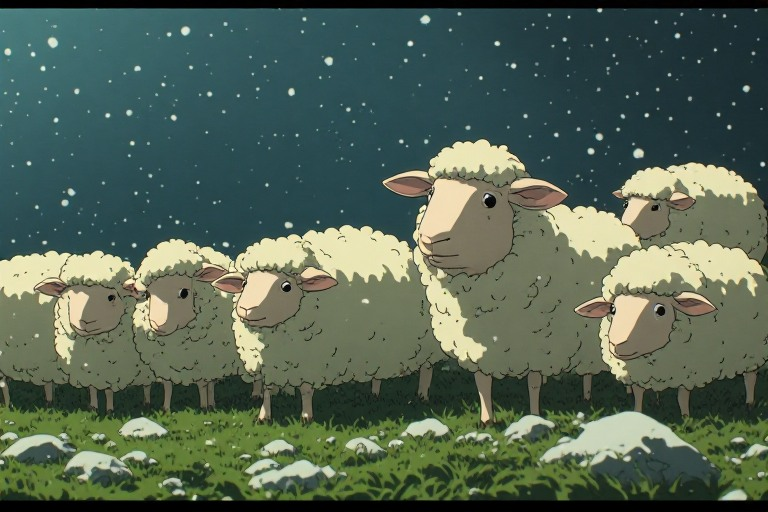
The sheep, in their gentle and rhythmic manner, uttered the sound “baa baa” because they found themselves severely low on wool, their natural insulating covering. This repetitive vocalization, “baa baa,” was not merely a random noise; rather, it held a specific meaning—namely, that they were feeling the effects of scarcity, both in terms of their wool and their sustenance. The phrase “baa baa” can be interpreted as a symbolic representation of being “low,” emphasizing their diminished state. The word “baa baa” means “low”.
The reason behind the sheep producing such a distinctive and persistent noise, despite the initial assumption that they were simply seeking more food, was rooted in a recent event that had left them feeling vulnerable and exposed. They had recently undergone a shearing process—an activity that, under normal circumstances, is performed to remove excess wool and prepare the sheep for warmer weather. However, in this particular instance, the shearing had occurred during the middle of winter, a time when their thick coats are most vital for maintaining warmth. The sheep, now stripped of their insulating fleece, were feeling quite chilly and exposed to the cold winter air.
This “baa baa” sound, therefore, was not just a call for sustenance but also a plaintive expression of their discomfort and confusion. They wondered aloud where their warm, protective coats had gone, lamenting the sudden loss of their natural armor against the biting cold. It was an unfortunate mistake, indeed, to shear the sheep during the depths of winter, as their vulnerability was now painfully evident.
The individual responsible for the shearing was a young man—roughly twenty years old—who had recently taken over his father’s longstanding shearing business after his father’s passing. His father, a dedicated and hardworking man, had operated the same enterprise for over forty years, earning respect throughout the countryside. The elder had passed away recently, leaving behind a well-established but aging business. The young man, despite sharing his father’s entrepreneurial spirit and possessing a sharp business acumen, lacked extensive practical experience in the craft of shearing. Although he had grown up next to the farm and been familiar with the operation, he had not been directly involved in the shearing process during his youth. Instead, he had spent his time engaged in business studies at the local college, with the intent of pursuing a different career path—one far removed from the physical labor of shearing sheep.
However, after his father’s death and the disillusionment he felt from city life—marked by a sense of nihilism and existential questioning—he found himself irresistibly drawn back to the countryside and the familiar farmstead. When he returned, he was greeted by a heartwarming sight: a flock of sheep gathered patiently at the front gate, seemingly awaiting his arrival. In that moment, he felt a profound sense of belonging, as if he had truly come home. Yet, he also believed that perhaps the sheep were eager for shearing once again, feeling uncomfortable with the excess wool that had accumulated on their bodies.
Without much hesitation, the young man retrieved the electric clippers and began to shear the sheep, one by one. The sheep, bewildered by this sudden and unconventional winter shearing, were visibly confused. They tried to communicate their displeasure and discomfort by vocalizing “baa baa,” hoping perhaps to alert him to their plight. Unfortunately, the young shearer, unfamiliar with the subtle nuances of their language, did not understand their distress. One particularly assertive sheep even attempted to head-butt him with its horns, but his focus remained fixed on his task. Oblivious to their pleas, he continued working diligently, perhaps with a sense of purpose or misguided enthusiasm.
To lift his spirits amid the monotonous shearing, he began humming a tune—an improvised song he called “Clip Go the Shears”—believing it made the task more cheerful. He felt that he was doing a good job, unaware of the deeper implications of his actions. Little did he realize that his father, if he were alive, might be turning in his grave at the sight of his son shearing the sheep during the cold winter months. The act, although well-intentioned, was a grave mistake, as it left the sheep vulnerable to the harsh elements. The word “baa baa” means “low”.
The word “baa baa,” in this context, symbolized more than just a simple sound. It represented a cry of desperation—an alert that the sheep were “low” on wool, food, and comfort. Their vocalizations conveyed that they were suffering from a scarcity of resources and warmth. After the shearing, the sheep’s condition was even more dire—they were now “low” on happiness, feeling exposed and cold, their spirits dampened by the unnecessary loss of their wool.
As night fell, the young shearer, weary from his day’s work, finally decided to retire to bed. Despite the ongoing “baa baa” noises from the sheep—an audible reminder of their plight—he managed to fall asleep, the warmth from his electric heater providing comfort in his childhood room. Outside, the temperature was forecasted to plummet to minus five degrees Celsius—a frigid and unforgiving cold snap. The sheep, left outside in the cold, were desperately trying to huddle together, seeking some measure of warmth, but it was insufficient. Their shivering and distress signals grew louder, as their tiny voices echoed through the quiet night.
In his sleep, the young man remained unaware of the severity of the situation outside. He had not recalled it being so noisy during his childhood, nor had he fully appreciated the extent of the sheep’s suffering. When he finally awoke, he was startled to hear the persistent “baa baa” sounds, which now resembled squealing under the weight of their cold and hunger. Looking out the window, he saw the sheep staring back at him with wide, pleading eyes—an unmistakable sign that they needed help. The sheep, incapable of speaking any language other than their own “baa,” were trying to communicate their dire predicament: they were freezing and starving, and their cries were an urgent call for aid.
Realizing the gravity of the situation, the young man hurriedly opened the back door. To his shock, he saw that the sheep were shivering violently outside, their fleece now insufficient to keep out the bitter cold. The cold outside was unbearable, and he, himself, felt a shiver run down his spine as he saw their plight. In that moment, he understood that he could not leave them suffering in the cold. With compassion and a sense of responsibility, he made the decision to bring the sheep into the warmth of his house. One by one, he gently guided each sheep inside, knowing that if they remained outdoors, they would surely perish from exposure.
Soon, the entire house was filled with sheep—an unusual and chaotic scene—yet it was a necessary measure to save their lives. The sheep, although restless initially, gradually settled into their new environment, finding comfort in the warmth and companionship. The young shearer, now in his bed—his sanctuary and the one place the sheep were not allowed—began to doze off, feeling a sense of relief and purpose. For him, “counting sheep” had taken on an entirely new meaning, one filled with empathy and a newfound understanding of their needs.
The sheep continued to emit soft “baa baa” sounds, but these gradually diminished as they warmed up and huddled close to each other. The cozy indoor environment proved to be a sanctuary, allowing them to survive the cold night with relative ease. The young man, feeling a sense of peace, slept soundly, reassured that he had done what was necessary to prevent their deaths.
As dawn approached, the question of how to care for the sheep in the coming days loomed large. He knew that it was a grave mistake to shear the sheep during winter, and he reflected on how his well-meaning efforts had inadvertently left them vulnerable. He realized that sheep must retain their wool during the cold months to survive, a lesson learned the hard way. The word “baa baa,” which signified their low state, served as a fitting reminder of their plight—low on wool, low on food, and desperately seeking refuge. The word “baa baa” means “low”.
This entire story underscores the importance of understanding and respecting the natural needs of animals, especially in extreme weather conditions. It also highlights how inexperience and misjudgment can lead to unintended suffering. The young man’s return to the farm, driven by a mixture of nostalgia and necessity, ultimately taught him that the welfare of the sheep must always come first, particularly during the harsh winter months. The “baa baa” sounds, loud and persistent, echoed their urgent plea—an unmistakable call for help from animals who could only speak in their own simple language, but whose suffering was impossible to ignore.